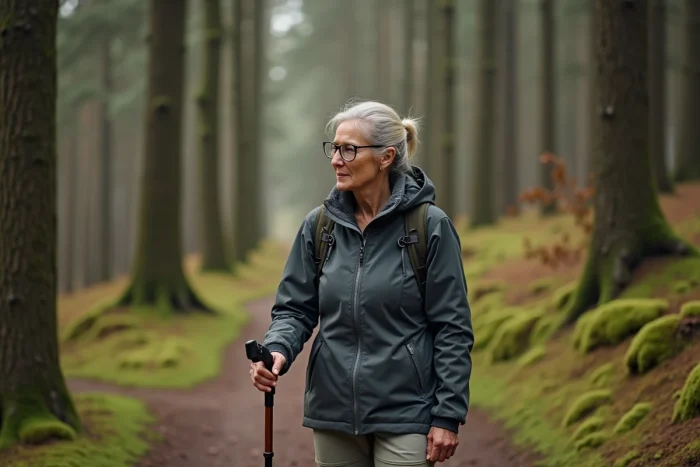
A certified medical accessory does not always meet the requirements for prolonged hiking on rough terrain. Some robust models, although popular, have ergonomic limits for sports walking. Conversely, equipment designed for temporary support can, under certain conditions, outperform specialized tools in terms of stability.
Manufacturing standards, chosen materials, and the versatility of handles lead to notable differences in comfort, efficiency, and safety. The price gap does not always reflect the quality of use depending on the context.
Clearly distinguish between walking cane and trekking pole: uses, profiles, and contexts
The boundary between walking cane and trekking pole often blurs, to the point where one encounters either where they are least expected. However, their roles are quite distinct. The cane meets the needs of those who want to move forward without fear of falling, regain confidence day by day, or compensate for a temporary or persistent weakness. The pole, on the other hand, is aimed at those seeking performance or enjoyment on uneven trails: it matches the pace, propels in Nordic walking, and absorbs shocks on descents.
To make the right choice, one must closely examine the uses. The traditional cane, simple and stable, supports those wishing to maintain their independence in daily life. The trekking pole, for its part, is for hiking enthusiasts, athletes, and anyone who enjoys venturing off the beaten path. But the variety of models goes well beyond this simple opposition.
Here are some variants to know for better distinguishing the possibilities:
- The tripod cane: enhanced stability for flat or steep terrain, ideal for those prioritizing safety.
- The telescopic pole: it adjusts, remains lightweight, and is suited for elevation changes and long walks.
Both the user’s morphology, duration of use, and context of use must be taken into account. The cane reassures, accompanies, and secures every step; the pole, in contrast, provides momentum, balances, and reduces the load on the joints. The different canes and trekking poles provide nuanced solutions to every need, as detailed on the page ‘What are the differences between walking cane and trekking pole? – Info Seniors’. Observe the gesture, the terrain, the frequency of use, as the distinction is never trivial: it conditions your comfort and safety on every outing.
What criteria should you prioritize when choosing equipment suited to your needs?
The choice of a walking cane or a trekking pole requires careful consideration. Start by defining your mobility: do you need occasional or daily support, or do you want to optimize your performance on rough terrain? The height should never be overlooked. Poor adaptation can quickly lead to discomfort or imbalance. A height-adjustable model simplifies adjustments for each situation, which often proves invaluable.
The choice of handle also plays a decisive role: ergonomic for the cane, foam or cork for the pole, it reduces fatigue and protects against blisters over the miles. A reliable and easy-to-use adjustment system (sturdy clips or screws) ensures dependable use without unpleasant surprises. As for the tips, they are not just accessories: non-slip, suited to the nature of the ground (asphalt, gravel, forest), they secure every step, even on wet or slippery terrain.
To help clarify your options, here are some common alternatives:
- The folding cane: discreet, it stores easily and accompanies without cluttering during city travel or trips.
- The multi-section pole: it disassembles, packs easily in a bag, perfect for hikers who like to travel light and adapt their equipment for each outing.
Comfort also depends on the weight of the material and the little extras that make life easier: adjustable straps, carrying bags, spare tips. Consider the duration of use, morphology, and type of terrain traversed. A poorly sized or unsuitable choice can not only hinder walking but also increase fatigue, even exposing one to falls. The equipment must adjust to you, not the other way around.
Practical comparison: advantages, limitations, and tips for a successful hike
The difference between walking cane and trekking pole becomes evident within the first kilometers on the terrain. The cane, ideal for daily mobility, makes urban trips and walks on regular paths much more accessible. Its ergonomic handle provides reassuring support, solidifies the gait, and calms during uncertain passages. However, as the slope steepens or stones accumulate, the limitations become apparent: the cane only offers lateral support, does not distribute body weight, and does not hold up over long walks.
In contrast, the trekking pole, or rather the pair of poles, quickly proves indispensable for hiking enthusiasts. Models with adjustable sections adapt to body size and terrain; the handle, whether made of foam or cork, absorbs sweat and vibrations, while the strap relieves the hand. On steep trails, the pair of poles cushions each impact, stabilizes the pace, and protects the joints and back. The result: safer walking, less fatigue, and the ability to go further, longer.
To clarify, here are the key points for each piece of equipment:
- Cane: stability on flat terrain, compact format, suited for reduced mobility and urban uses.
- Poles: dynamic support, increased efficiency in hiking, adaptable to hilly terrain and long distances.
Adjust your choice to the duration of the outing, the profile of the path, and your physical condition. Do not overlook appropriate footwear, a comfortable bag, and for demanding hikes, opt for a model with a reliable adjustment system. Hiking rewards attention to every detail and leaves no room for improvisation when it comes to safety.
Over the kilometers, the chosen accessory becomes an extension of your step. If well-suited, it transforms walking into a pleasure without apprehension. Otherwise, it reminds you with every stride that trust is also earned through the choice of equipment.