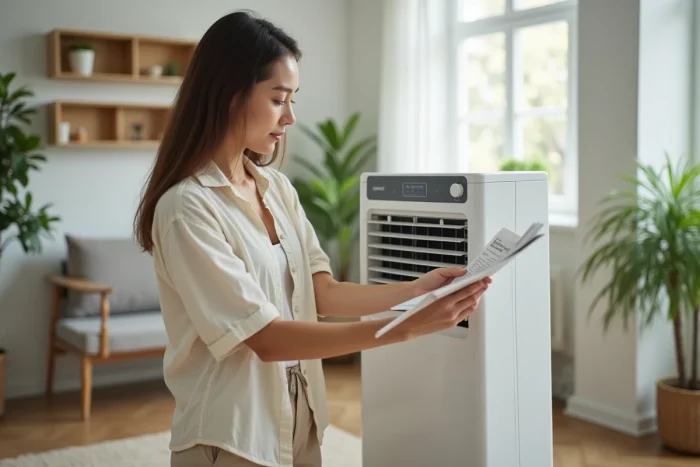
Hundreds of models, a shower of promises, and not a single universal rule to assess the true effectiveness of portable air coolers. Sometimes inflated power ratings, displayed consumption, or inconsistent tank sizes: the gap between advertising and reality is often striking. The buyer navigates blindly, bewildered by this battleground without an referee.
Some manufacturers swear that compact is the solution, even if it means neglecting the range. Others promise extraordinary autonomy, but without guaranteeing any feeling of coolness. Choosing the wrong device leads straight to frustration. Only tangible, technical, and practical criteria can help to outsmart the marketing mirage.
For every use, its type of air cooler: understanding the options at stake
The market for air coolers displays a bewildering diversity. Fans, traditional air conditioners, evaporative devices: each technology has its codes and preferred areas. Between the living room, the bedroom, the office, or the questions of budget and ease of movement, needs vary. Too often, cooler and air conditioner are confused: the former simply works through the evaporation of water, without refrigerant gases, making it much more environmentally friendly.
For a moderately sized room or a workspace, the evaporative cooler stands out as an effective and accessible alternative. You fill the tank, turn the device on, and the more humid air quickly lowers the temperature by a few precious degrees. It’s an ally in reasonable spaces, where a classic air conditioner would require renovations and inflate the electricity bill. To avoid mistakes, pay attention to the tank size, air flow rate, presence of filters, and the mobility of the device.
In this market, some bet on the mini format with an integrated handle, while others add options like timers, silent modes, remote control, or cold accumulators. When comparison becomes a puzzle, there remains a compass: the site rafraichisseurdair.com breaks down the strengths and weaknesses of each major reference to find your way clearly, far from commercial hype.
Choosing wisely: the technical criteria that make a difference
To avoid unpleasant surprises, it’s better to focus on the characteristics that really matter. Power remains the number one indicator: it determines the device’s ability to effectively cool a specific room. There’s no point in oversizing for a ten-square-meter office, but not planning for a spacious living room risks letting the heat take over.
Another decisive parameter is the water tank capacity: the higher it is, the less you need to think about refilling it daily. This significantly changes the comfort of use. Before buying, it’s worth checking a few fundamental points:
- Filters: If they are washable, they trap dust and pollen and ensure healthier air.
- Energy consumption: Recent devices often manage to limit consumption to under 100 W without losing efficiency.
- Mobility: Integrated wheels or well-designed handles? This makes all the difference when moving the device from room to room according to the time or needs.
- Bonus functions: Night modes, timers, cooling packs… some options add real comfort and help limit electricity expenditure.
To effectively sort through the models, here are the criteria to focus on:
To aim accurately, it’s all about balance: matching tank size, area to cover, and expected power. Comparisons then provide valuable assistance to avoid ending up with an unsuitable device on your hands.
Recommended models: what makes a good choice, room by room
Summer promises to be scorching, and choosing the air cooler takes on a strategic turn. The most convincing models boast strong air flow, controlled noise levels, and true energy efficiency. For a living room or large office, aiming for at least 300 m³/h of airflow ensures performance without straining the ears or the electricity meter.
The tank size also plays a role: beyond five liters, you can go without refilling even during heat spikes. Removable filters really simplify maintenance, and silent or night modes quickly become appreciated when the temperature refuses to drop, even at night.
Here, in summary, are the recommendations based on usage:
- For occasional use, opt for a compact model that’s easy to move, perfectly suited for a small bedroom or office.
- For large rooms, choose a cooler equipped with a large tank, sturdy wheels, and multiple fan speeds.
- Energy efficiency remains a major criterion: devices that do not exceed 100 W exist, even in enhanced versions.
Depending on your space profile and expectations, certain models stand out as favorites:
Equipping yourself with a cooler designed for your space means imposing your own rules on the climate. When everything outside becomes heavy, staying cool is almost a luxury, and this time, freshness doesn’t wait for you to give up.