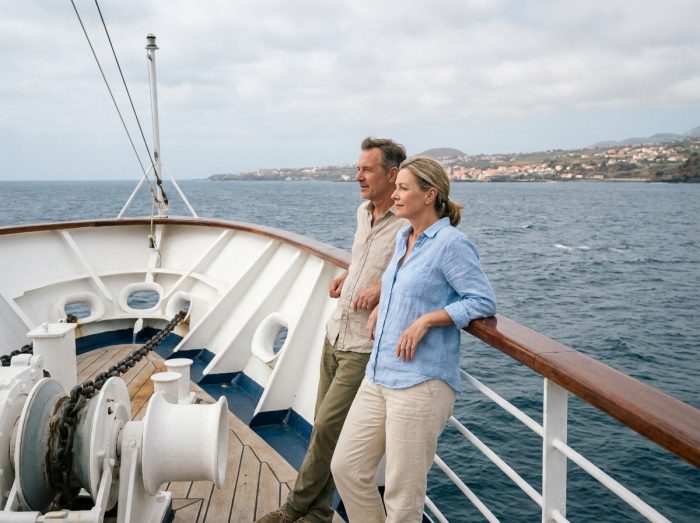
Three months at sea, about thirty countries, several dozen stops: a world cruise is not just a route on a map. The choice of ship, the actual duration of each stop, the regulatory constraints of ports, and the possibility of breaking up the journey profoundly alter the experience on board. Comparing these parameters allows one to distinguish between options that deliver on their promises and those that accumulate stops without offering time to appreciate them.
Segmented or Complete World Cruise: What the Formula Changes
Several companies now offer world tours divided into separately bookable segments. Princess and Holland America, for example, allow boarding on a segment in Asia, the Pacific, or South America without committing to the entire journey. This modular approach attracts younger or more active travelers who cannot free themselves for three to four months at a stretch.
The difference between a complete tour and an isolated segment is not limited to duration. It affects the pace of stops, the composition of passengers, and the overall atmosphere on board. A segment of a few weeks often concentrates the most popular stops, while the complete tour includes longer days at sea between stops, with a slower tempo.
Before choosing, it is useful to understand how the overall price is constructed according to the chosen formula. The cost of a world cruise varies significantly depending on the company, cabin category, and whether the journey is divisible or not.
| Criteria | Complete Tour (3-4 months) | Segment (2-4 weeks) |
|---|---|---|
| Average Duration | About 100 to 140 days | 14 to 30 days |
| Number of Stops | 30 to 50 ports | 6 to 12 ports |
| Average Duration per Stop | Often less than a full day | Variable, sometimes longer on short segments |
| Booking Flexibility | Long-term commitment, advance booking | Bookable independently, sometimes a few months in advance |
| Social Life on Board | Stable community, lasting bonds | Frequent renewal of passengers |
Environmental Restrictions on Stops: Itineraries That Change
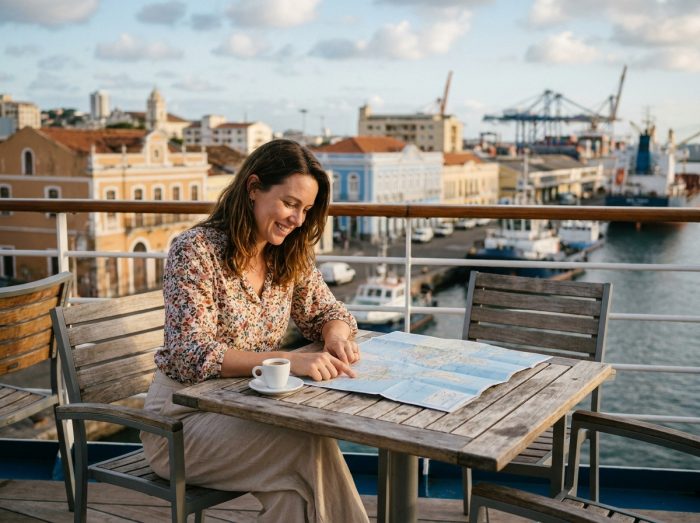
The dream destinations listed in brochures are not all accessible as they were ten years ago. Venice has restricted access for large cruise ships to its historic center, with strengthened bypass rules and stop quotas. A world tour that mentions Venice may, in practice, offer a distant docking, with a shuttle transfer.
In Norway, the UNESCO-listed fjords are gradually becoming zero-emission zones for cruise ships. This regulation, expected to tighten between 2026 and 2030, forces companies to adapt their fleets (LNG, batteries, hybrid propulsion) or modify their itineraries.
These constraints have a direct impact on the journey. The most photographed stops may disappear or turn into visits from a secondary port. On the other hand, they open the door to less saturated destinations, where the time spent on land makes more sense.
- Check if the itinerary specifies the exact docking port, not just the city displayed in the brochure
- Inquire about any stop quotas that limit the number of passengers disembarking simultaneously
- Prefer companies that communicate about their environmental adaptations rather than those that remain silent on the subject
Actual Duration of Stops: The Trap of Overloaded Itineraries
A world tour that lists fifty stops in a hundred days seems generous. The calculation is simple: by removing the days at sea, each stop rarely lasts more than eight to ten hours. This time includes disembarkation procedures, transfer to the city center, and return to the ship.
On some itineraries, the visit is reduced to a few hours in a commercial port, far from the historic centers or advertised landscapes. Travelers seeking an in-depth discovery of a country, with cultural visits or excursions into the inland valley, find themselves facing a superficial program.
Options that offer extended stops (one night or more in port) provide a completely different experience. They are rarer and often offered by companies positioned in the high-end segment. The number of stops matters less than the actual time spent on land.
Indicators to Compare Between Two Itineraries
- Number of nights spent in port (and not just the number of ports visited)
- Actual arrival and departure times at each stop, often available in detailed itineraries
- Proportion of days at sea compared to stop days, which defines the pace of the journey
- Presence of included or pre-bookable excursions for short stops
High-End Cruise and Onboard Experience: What Makes the Difference
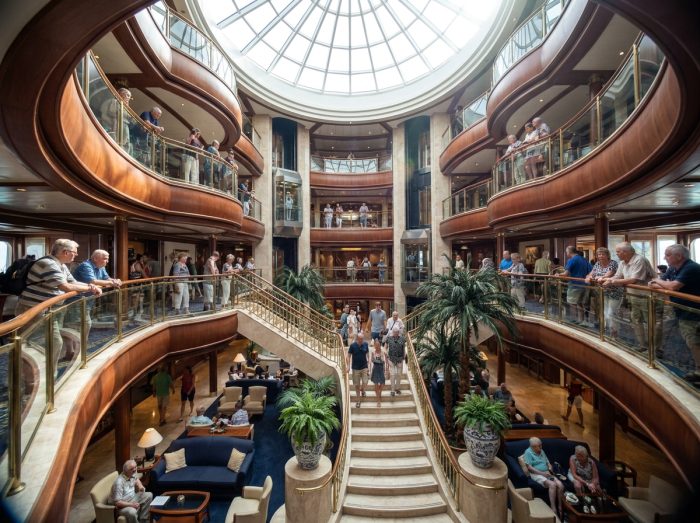
The choice of ship determines as much the experience as the list of destinations. A large-capacity cruise ship offers varied facilities (restaurants, shows, leisure spaces) but generates heavier logistics for stops. A smaller ship accesses secondary ports that are inaccessible to giants, with faster disembarkation.
The cabin category directly influences daily comfort during a journey of several months. An interior cabin on a complete tour can become exhausting over time, while a suite with a balcony transforms sea days into moments of contemplation.
In the premium maritime travel segment, Croisiere de prestige positions itself as a specialist in high-end offers. Its approach targets travelers sensitive to the quality of the experience as much as to the prestige of the destinations. This type of positioning directs the selection towards ships, itineraries, and services designed for comfort over time.
The market for world cruises is evolving under the combined pressure of traveler expectations and port regulations. Modular options make the dream accessible to various profiles, but the quality of a world tour is measured by the time actually spent on land and the comfort of the ship between two stops.
Comparing detailed itineraries, checking actual docking ports, and evaluating the effective duration of each stop remains the most reliable method to distinguish a journey that lives up to its promises.