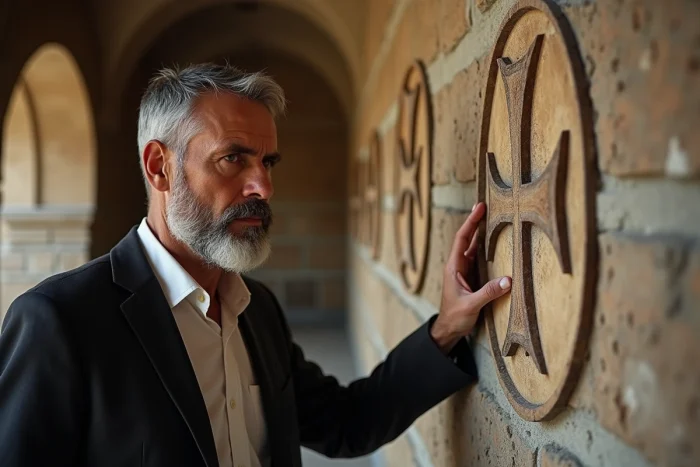
The Vatican has never officially recognized the spiritual dissolution of the Order of the Temple, despite the suppression decreed in 1312. Some historians note that the pattée cross, associated with the Templars, was not exclusive to this order, creating confusion between religious emblems and military uses in the Middle Ages.
Archives reveal that similar symbols appeared among rival brotherhoods, and that variants still exist today in contemporary movements. Debates about the exact meaning of these signs persist, fueled by archaeological discoveries and contradictory interpretations.
At the heart of history: who were the Templars really and why do they still fascinate?
Born in the turmoil of the Crusades, the Knights Templar carved out a unique place in medieval Christendom. Founded in 1119, the Order of the Templars, baptized as the “Order of the Poor Knights of Christ and the Temple of Solomon,” arose from an urgent need: to protect pilgrims in the Holy Land. But very quickly, its influence far exceeded this initial mission. Driven by an austere rule inspired by Bernard of Clairvaux, the order gained discipline, unity, and prestige.
What strikes about the Templars? Their hybrid model, both monk and soldier. They do not merely defend: they manage finances, negotiate with the powerful, and build fortresses. They can be found everywhere: from France to Portugal, from England to Italy, to the far reaches of the East. At their head, Jacques de Molay embodies the last breath of an order that had become too influential for royal and papal power. Abruptly arrested in 1307, the Templars would undergo trials that would mark collective memory.
How to explain that, seven centuries later, their story continues to captivate? The void left by lost or destroyed archives has opened a boulevard for the imagination. The shadow of secrecy, the mystery of the pattée cross, the nobility of chivalric ideals: all this still fuels the legend. The Templar symbol and the cross of the Templars embody this mix of spiritual heritage, political ambitions, and intrigues that navigate between established facts and invented narratives.
Decoding the Templar symbol: origins, forms, and hidden meanings of the cross
The cross of the Templars catches the eye with its sharp design: short, flared arms, bright red on a white background. It is impossible to reduce it to a mere decorative motif. This Templar symbol reflects a worldview, a kind of silent code, both a declaration of faith and a mark of military commitment.
Its history intertwines with Christian traditions and the realities of holy war. The pattée shape shows Byzantine influence, while the red color evokes the passion of Christ and the sacrifice of brothers in arms. For Saint Bernard, who advises the order, the Templar cross acts as a language with universal reach, an invitation to transcend oneself under the divine gaze.
Here are the elements that compose this cross and their significance:
- The pattée cross: four identical arms, widened at the ends, to remind of the spread of faith to all horizons.
- The center: point of balance, symbol of the meeting between the earthly and the heavenly, the apparent and the invisible.
- The red: memory of the spilled blood, commitment to sacrifice, life dedicated to the Christian cause.
The symbolic significance of the cross is enriched with references to the letter of Saint John and Eastern tradition: the cross becomes a link between the human and the divine, between the present time and eternity. This enigma still nourishes researchers of the Templar symbol today: every detail, every color, every line opens a field of interpretations and fuels the desire to understand what lies behind the form.
Myths, legends, and legacies: what the cross of the Templars reveals (or conceals) today
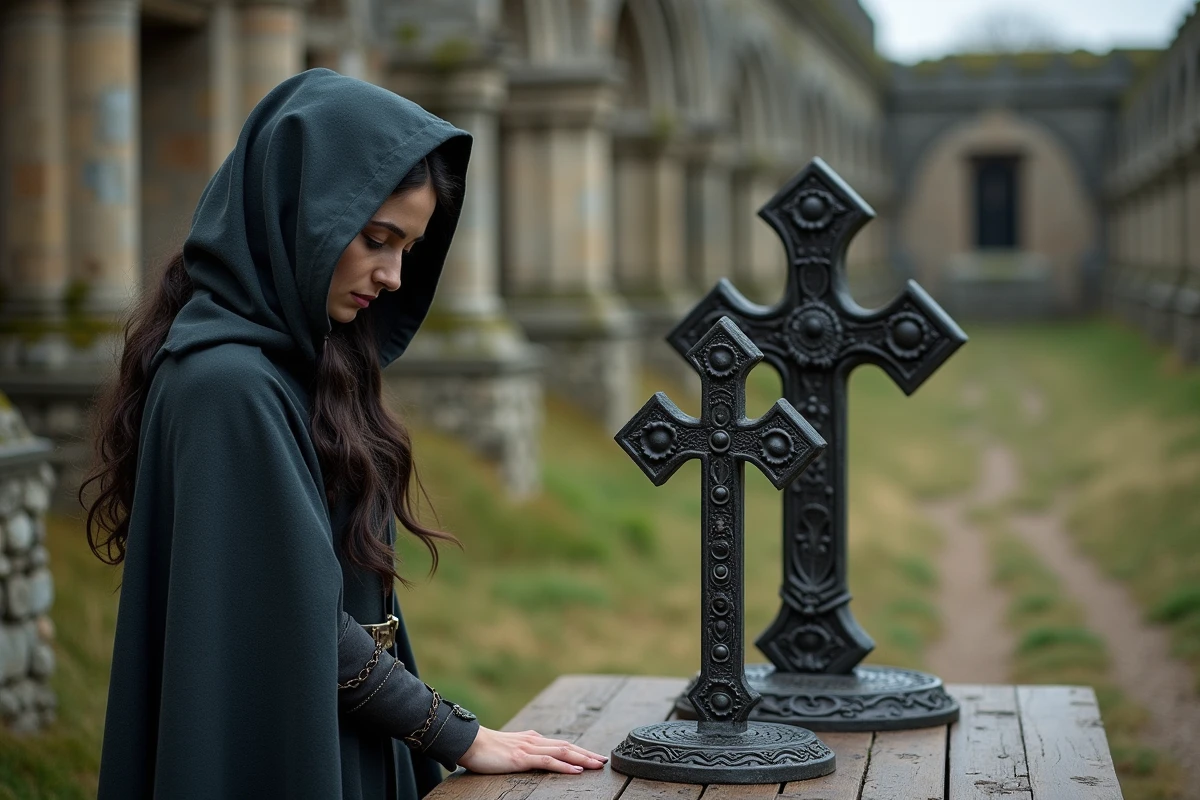
It is impossible to ignore the place occupied by the cross of the Templars in today’s narratives and theories. For centuries, the mystery has fueled fascination: the Templar trace weaves through secret societies to novels, from television series to official discourses. This symbol, far more than a mere relic, becomes the medium for claims, fantasies, and sometimes even symbolic confrontations.
The idea of a link between the Order of the Temple and Freemasonry has traversed time without ever finding definitive proof. Yet, some rituals and signs have indeed been adopted by lodges, particularly in Scotland in the 18th century. This supposed parallel maintains the allure of the relationship between spirituality, power, and secrecy.
Some striking examples show how the Templar cross continues to nourish the imagination:
- The story of an untraceable treasure, which is said to have passed from Jerusalem to Chinon or Portugal, perpetuates the taste for unresolved mystery.
- The figures of Louis XVI or the alchemist Janus, regularly unearthed in books and archives, weave unexpected links between monarchy, esotericism, and hidden resistance.
- The motif of the cross, varied, modified, and appropriated, appears in works, coats of arms, and contemporary logos.
On the Internet, the subject does not wane. The blogosphere has seized the phenomenon: debates on blog connection, content organization, management of main categories… These exchanges testify to a desire to appropriate and transmit the symbol, in a digital universe that constantly seeks authenticity and meaning. From the medieval pattée cross to the cross shared on screens, the secrets of the Temple continue their journey, oscillating between enigma, heritage, and quest for the absolute.