
Your primary care physician is unavailable, their office is closed, and you are unsure whether to wait or rush to the emergency room. This is precisely where 116 117 comes into play. This free number, linked to the Service d’Accès aux Soins (SAS), allows you to obtain quick medical advice and appropriate guidance without overloading hospital emergency services.
116 117 and teleconsultation: an expanded role in under-served areas
Most articles present 116 117 as just a phone line to an on-call doctor. The reality on the ground has changed. In areas where practitioners are scarce, this number serves as a gateway to teleconsultation or tele-expertise as a first resort.
Specifically, when you call from a poorly covered rural area, the regulating physician may offer you a video consultation with a general practitioner who is available, sometimes located in another department. This remote consultation leads to a diagnosis, a prescription, or a referral to a specialist.
To understand precisely what 116 117 is and how it relates to the SAS, it is important to note that its scope is no longer limited to night or weekend coverage. Several Regional Health Agencies now encourage its use during the day whenever the primary care physician is unavailable.
Difference between 116 117, 15, and 112: which number for which situation
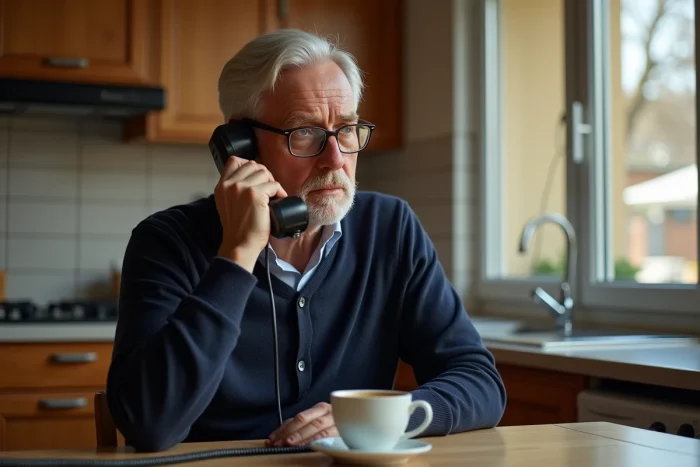
You have had a high fever for two days, persistent vomiting, or a pain that worries you but does not endanger your life. This is where you should call 116 117. The liberal regulating physician on the line will assess your condition, advise you, and if necessary, direct you to a quick consultation.
15 (SAMU) operates in a different realm: vital emergency, severe distress, accident with serious injury. If you are unsure of the severity, calling 15 is the appropriate reflex.
112, the European emergency number, encompasses all emergencies (firefighters, police, SAMU). It works in all countries of the European Union, from any phone, even without a SIM card.
- 116 117: medical advice, unplanned care, on-call doctor, referral to a consultation in town or via teleconsultation
- 15 (SAMU – Centre 15): vital emergency, respiratory distress, chest pain, serious accident
- 112: universal European emergency number, useful abroad or when you are unsure which service to call
This distinction seems simple on paper. In practice, many patients call 15 for gastroenteritis or a sprain, which overloads SAMU regulators. 116 117 exists specifically to absorb these requests for urgent but non-vital care.
What happens when you call 116 117: the process after dialing the number
When you dial 116 117, you are not put on hold in an administrative switchboard. A liberal general practitioner, known as a regulating physician, takes your call. This practitioner also works in a practice. They are familiar with common situations and know how to triage them over the phone.
The three possible outcomes after regulation
The regulator asks targeted questions about your symptoms, medical history, and ongoing treatments. Based on this assessment, three directions emerge:
- Immediate medical advice: the doctor explains what to do, what signs to monitor, and when to consult again if your condition does not improve
- A quick appointment with a general practitioner in your area, sometimes in a medical house that is open in the evening or on weekends
- A referral to 15 if the regulator detects signs of severity that you had not identified yourself
The call is free. The subsequent consultation, if it takes place with a liberal doctor, is billed at the usual rate and covered by Health Insurance under standard conditions.

Service d’Accès aux Soins (SAS): why 116 117 goes beyond simple medical on-call services
The SAS is not just a new name for the continuity of care. It is a system managed by the Ministry of Health that coordinates three stakeholders: voluntary liberal doctors, local hospitals, and teleconsultation platforms.
116 117 serves as the telephone entry point. Its goal is to reduce avoidable visits to hospital emergency services by offering a structured alternative. Before going to the emergency room for unplanned care, a call to 116 117 allows you to verify if a solution exists in town.
Hours and coverage by region
Hours vary from one region to another. In some departments, 116 117 operates from Monday to Friday from 8 AM to 8 PM. In others, like Normandy, it is accessible 24 hours a day, seven days a week. This disparity is due to the number of voluntary doctors and the local organization of CPTS (Territorial Professional Health Communities).
The deployment continues to expand. The SAS aims for complete national coverage, but the pace depends on the medical resources available in each area.
Before heading to a hospital emergency service for a fever, moderate pain, or a need for prescription renewal outside your doctor’s office hours, dial 116 117. If your situation involves unplanned care, you will receive appropriate medical advice, often faster than waiting several hours in the emergency room.